Advantages of piezo technology
Reading time: 3 min
Piezo technology is known for high-precision movements and compact size. Through our patented technology, Xeryon is able to offer speed, long travel, long lifetime and silent operation as additional benefits on top of this, distinguishing itself from traditional piezo technology.
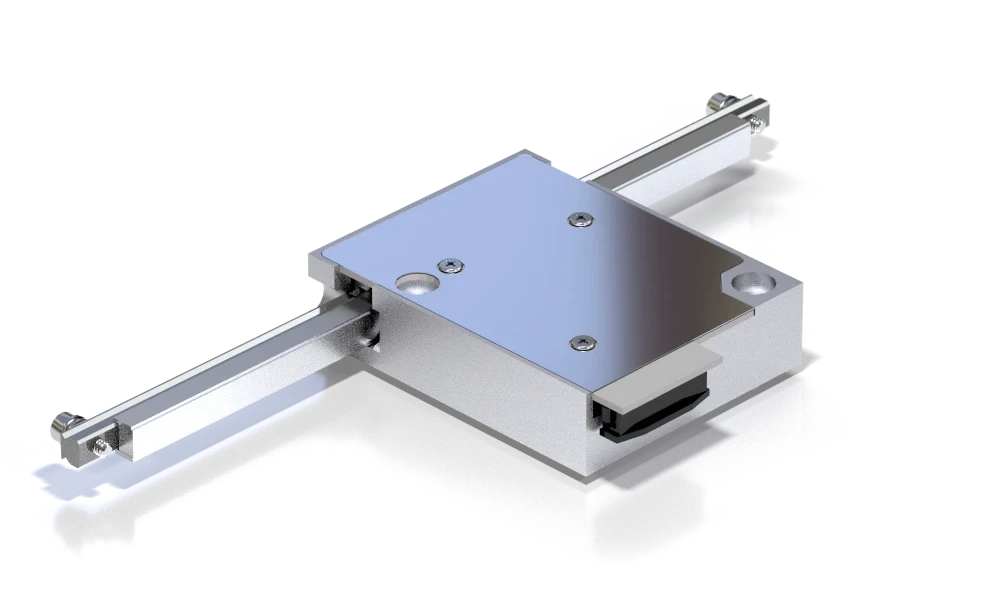
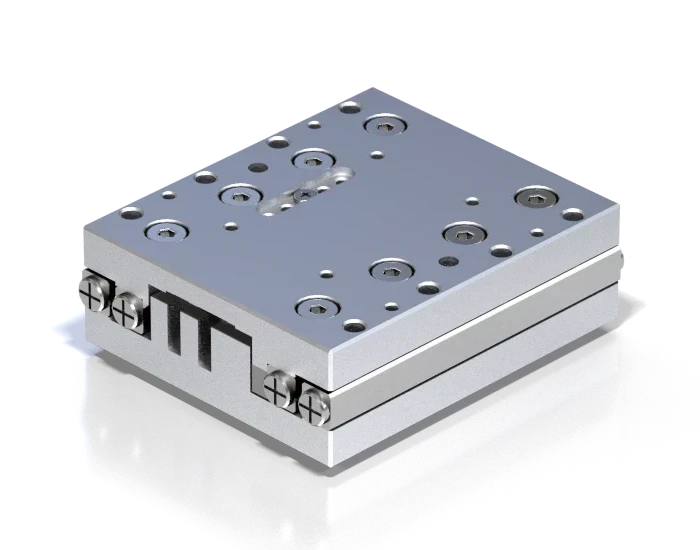
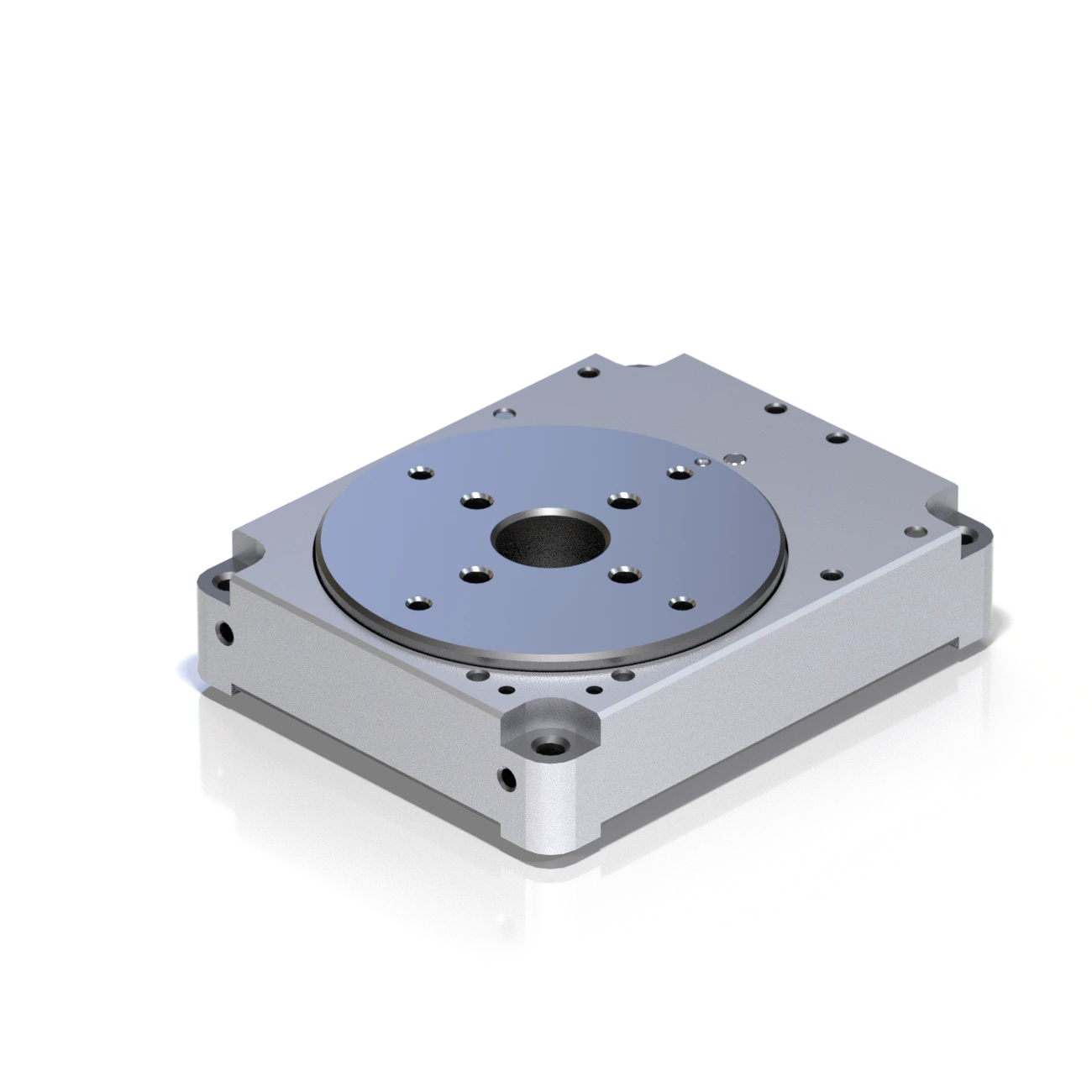
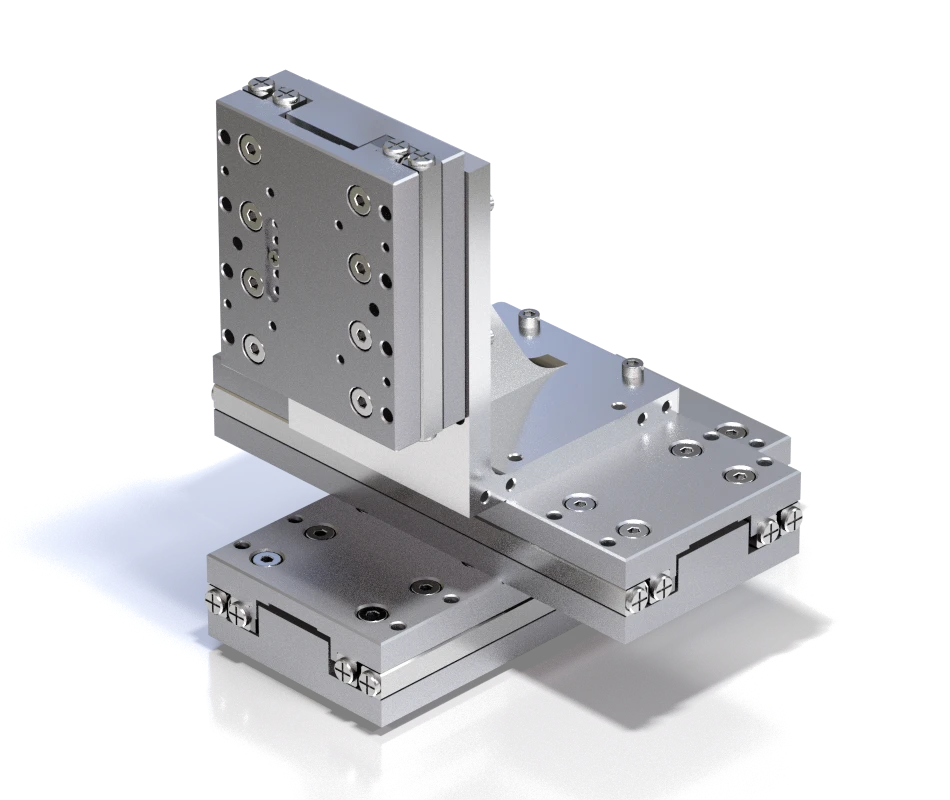
Xeryon offers a range of linear and rotary motion products in different lengths and with many additional options. With standard travel ranges up to 150 mm, the number of possible applications is endless. Thanks to the patented Crossfixx™ ultrasonic piezo technology, travel velocities of 1000 mm/s can be reached, making Xeryon stages and actuators the fastest nano-precision positioners on the market.
For each model, additional options are available – for example, high vacuum compatibility, making the stage the perfect solution for your SEM or your vacuum chamber. With the optional extra small cage, we can get even more travel distance from our stages, driving the volume vs stroke ratio to the limit.

Xeryon's ultrasonic piezo technology advantages
Fast point-to-point positioning
Due to the high frequency driving principle, high maximum positioning speeds can be attained of over 1000 millimeters per second.
Noiseless operation
Due to the high frequency electric drive signals, the human ear is unsensitive for ultrasonic piezo motors. This feature makes ultrasonic piezo stages particularly suitable for noise-sensitive applications and for protecting the health and well-being of human operators.
Long lifetime
All piezo motors are susceptible to wear because of the frictional operating principle. Stick-slip and inertial piezo motors typically show a limited lifetime in the order of 1 to 10 kilometer, while piezo stepping motors are even more prone to wear. Ultrasonic piezo motors on the contrary have the advantage of achieving lifetimes of 100 kilometer and more.

The Xeryon XLA, our miniature linear actuator, offers sub-micron precision at speeds of over 1000 mm/s - finally bringing piezo precision to more demanding industrial applications.
Slow scanning speed
Most piezo stages are used for point to point positioning, but ultrasonic piezo motors can be programmed to follow low and constant speed motions of several micrometers per second. Depending on the speed, deviations smaller than 1% can be achieved, unlike the typical stepping or saw-tooth (stick-slip) motion patterns.
Low power consumption
Xeryon’s ultrasonic piezo motor shows a very low power consumption, smaller than 1 Watt. These motors are always operated on natural eigenfrequencies and at these frequencies, the amplitude of motion is maximized for the applied electrical power. This is one of the reasons why these motors are used in portable, battery powered, devices.
Zero drift
Through the use of advanced control algorithms, it is possible to make individual positioning steps of nanometer level. Because of the static holding force it becomes possible to keep this extreme positioning resolution with zero drift.
Low-voltage operation
Xeryon’s ultrasonic piezo motors are driven by low voltage signals, which are always smaller than 48 Volt peak to peak. For hand-held devices, the motor can be powered via a standard 5 V USB input voltage.
Back-drivable
The position of ultrasonic piezo stages can be overridden manually, by overcoming the static friction force. This can be useful for coarse alignment and such an action will not influence the lifetime of the stage.
Traditional piezo technology advantages
Xeryon's piezo technologies comprise all of the general piezo advantages:
Compact size
The size of piezo motors typically lies in the order of magnitude of millimeters or centimeters. The small-sized motors enable the miniaturization of all kinds of automated systems.
High precision
Piezo stages are well-known to easily achieve micrometer precision. For high-tech applications, even sub-nanometer precision can be attained.
Static holding force
Piezo motors benefit from a self-locking property. Even when the motor is powered off, the stage remains stationary. This is because the operating principle is based on friction.


Low magnetic interference
Unlike electromotors, piezo motors do not produce any significant magnetic fields. By carefully selecting the materials of the stage, piezo stages can be used in strong magnetic fields (several Tesla) or applications where no magnetic disturbance or interference is allowed.
Vacuum compatibility
Since there is no convection in a vacuum, electric motors can rapidly heat up and degrade when placed in vacuum. Piezo motors on the contrary consume less energy and are very compact, which makes them suitable for in-situ vacuum motion.
Large travel
As opposed to piezo actuators, piezo motors can achieve macroscopic movement. The travel range is only limited by the length of bearings or rails used.
Direct drive
Piezo motors work on a frictional mechanism. There is no need for a transmission, such as belts or gears. This reduces the complexity of the system and results into a backlash-free and more precise positioning.
Want to learn more?
Continue reading about Xeryon's proprietary ultrasonic piezo technology.