Mini & Micro Linear Actuators: A Complete Guide to Compact Precision Motion
Reading time: 15 min
Mini and micro linear actuators are at the heart of today’s precision motion systems, delivering accurate, repeatable linear movement in applications where space, efficiency, and control matter most. From robotics and optics to medical instruments and semiconductor tools, these compact devices enable motion on scales ranging from millimeters to nanometers.
In this article, you’ll learn what mini and micro linear actuators are, how they work, the technologies behind them, and how to select the right actuator for your application. We’ll also explore key performance metrics, components, costs, and the role these actuators play across different industries, offering a complete overview of small-scale linear motion.
Looking for an ultra compact mini linear actuator for your instrument?
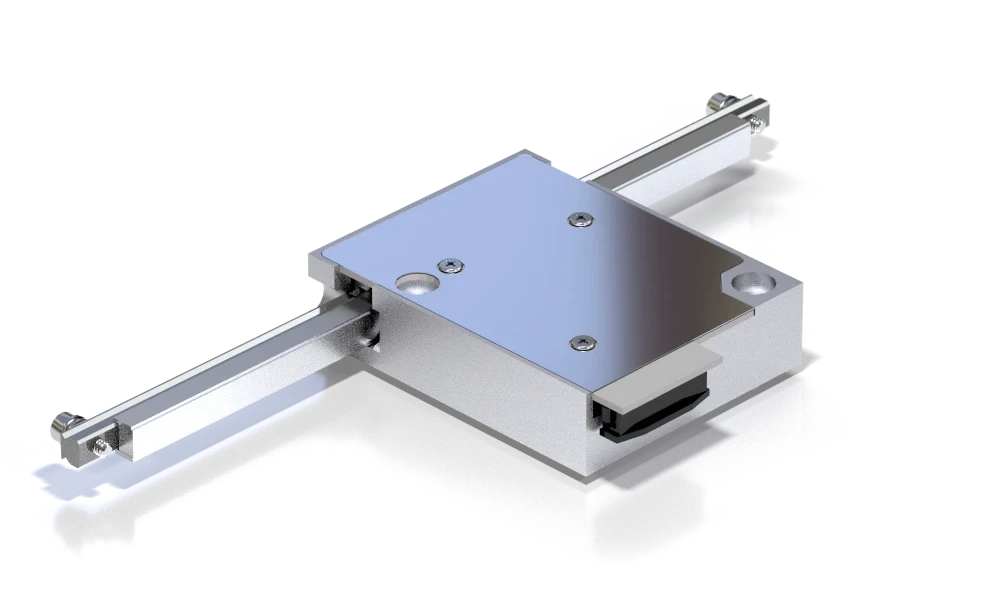
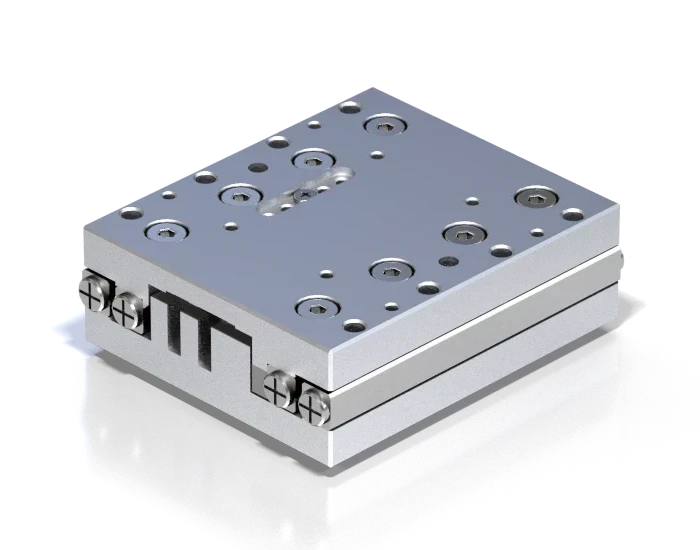
Explore Xeryon’s XLA Series: ultra-compact mini and micro linear actuators with sub-micron precision, integrated controller, and power-off holding.

What is a Mini/ Micro Linear Actuator?
A linear actuator is a device that converts energy into straight-line motion. Unlike rotary motors, it moves forward and backward along a single linear axis, making it ideal for applications that require controlled, precise positioning. A mini linear actuator or micro linear actuator is a smaller, compact version designed for applications where tiny footprints, precision, and efficiency are critical.
These actuators are commonly used in systems that require fine control, high accuracy, and efficiency, such as medical devices, robotics, optics, and semiconductor equipment. Depending on the design, they can operate at high speed, offer long stroke lengths, or achieve nanometer-scale precision. Variants include compact linear actuators, lightweight linear actuators, and low-profile actuators, each tailored for specific environments where size and performance must go hand in hand.

Mini vs Micro vs Nano Linear Actuators
Terms like mini linear actuator, micro linear actuator, and nano linear actuator are often used interchangeably to describe very small linear actuators designed for compact or space-constrained, high-precision applications. While there is no strict technical standard separating these categories, the terminology usually reflects emphasis:
- “Mini” highlights compact or tight form factor.
- “Micro” is often used in relation to small-scale automation or instruments.
- “Nano” is associated with positioning accuracy that can reach nanometer resolution.
In practice, the distinction is mostly about terminology rather than fundamental design. Modern actuators can achieve nanometer-level resolution while also offering stroke lengths that range from micrometers to millimeters or even centimeters. Whether they are labeled as mini, micro, or nano, the underlying function is the same: providing precise and compact linear motion.
How Do Miniature Linear Actuators Work?
How a miniature linear actuator works depends on the technology inside it. While all of them deliver motion in a straight line, the way this motion is generated can differ greatly. Some use mechanical screws to convert rotary motion to linear motion, others rely on fluid pressure, and advanced designs make use of piezoelectric materials. Each approach offers different trade-offs in force, speed, stroke length, and precision, which is why miniature actuators can be applied to such a wide range of applications.
- Electro-magnetic screw-driven actuators: These combine an electric motor with lead screws or ball screws to convert rotary motion into linear displacement. A cost-effective option common in automation and robotics, useful in applications that require controlled positioning and moderate speed.
- Electro-magnetic direct-drive actuators: Examples include linear motors, linear shaft motors and voice coil actuators. These generate motion directly from electromagnetic fields without screws or belts. They provide smooth, fast movement and are often paired with encoders, making them suitable for applications that demand high speed and precise position feedback.
- Hydraulic and pneumatic actuators: These actuators rely on pressurized fluid or air, typically chosen for applications requiring high force over longer strokes where fine positioning accuracy is less critical.
- Piezo actuators: These use piezoelectric materials, which expand and contract when an electric field is applied or removed. The displacement produced is extremely small but can be amplified through mechanical structures to generate precise linear motion, making them valuable in applications that require compact size and nanometer-scale accuracy. Recent developments in piezo technology, such as ultrasonic piezo actuators, extend these benefits to higher speeds and longer stroke lengths while maintaining sub-micron precision.
In practice, the choice of mechanism determines how well a mini linear actuator performs in terms of speed, load capacity, and resolution. This makes understanding the working principle essential before selecting the right actuator for applications in bio-imaging, optics, robotics, metrology, or semiconductor equipment.
What Are the Different Types of Small Linear Actuators?
Small linear actuators can be built using different motor types and actuating mechanisms, each offering unique benefits depending on speed, precision, and force requirements.
Common motor types used in micro actuators:
- Brushed DC motors: Simple, low-cost motors with short lifetimes due to brush wear.
- Brushless DC motors: Longer-lasting, higher torque motors requiring electronic control.
- Stepper motors: Reliable motors that move in discrete steps, ideal for basic positioning.
- Servo motors: Any motor combined with feedback for closed-loop, high-precision control.
- Piezoelectric motors: Use the piezoelectric effect; capable of nanometer resolution.
Popular linear actuator mechanisms:
- Rack and pinion actuators: Gear-driven, low-cost designs with higher friction and wear.
- Solenoid actuators: On/off electromagnetic plungers; cheap but limited control.
- Lead screw actuators: Simple screw-driven systems; affordable but slower and bulky.
- Ball screw actuators: Improved screw design with less friction; higher precision, but still bulky.
- Linear motors: Direct-drive electromagnetic actuators for smooth, high-speed motion. Sensitive to thermal issues.
- Linear shaft motors: Similar to linear motors. Direct-drive actuators that use magnetic fields along a shaft for smooth, backlash-free motion with high acceleration and durability.
- Voice coil actuators: Compact electromagnetic actuators suited for dynamic positioning over short strokes (<10 mm).
- Piezo stack actuators: Layered ceramics that expand under voltage; deliver high force and precision but stroke is limited to microns.
- Walking piezo actuators: Stepwise piezo designs offering better durability but limited stroke and speed.

- Ultrasonic piezo actuators: Compact high-speed piezo motors delivering fast, sub-micron motion over millimeter or centimeter distances. These are extremely durable mini or micro linear actuators.
- Stick-slip piezo actuators: Very precise but slow and limited in travel.
For a full breakdown of these types, including strengths, limitations, and applications, see our dedicated guide: [The Ultimate Overview of Micro Actuators].
Why Compact or Small Linear Actuators Matter
The demand for smaller, more efficient devices has made compact linear actuators increasingly important in modern engineering and design. They enable precise linear motion in spaces where traditional actuators would be too large, inaccurate, or inefficient.
Key advantages of small actuators:
- Space-saving design: Essential for miniaturized systems in medical, optical, and semiconductor manufacturing technologies.
- Lightweight integration: Reduces overall system size and weight, especially important in benchtop or portable devices.
- Precision in small footprints: Delivers fine positioning where accuracy matters most.
- Silent or low-noise operation: Critical for labs, imaging, and other sensitive environments.
- Versatility: Used across industries from robotics and automation to microscopy and lab automation.
- Energy efficiency and low heat generation: Compact actuators, especially piezo-based and direct-drive designs, convert energy more effectively, producing less heat and improving long-term stability.
In short, compact linear actuators allow engineers to achieve high performance without sacrificing space or efficiency. To better understand their capabilities, it helps to look at the key performance metrics that define actuator selection.
Metrics That Matter: Choosing The Right Actuator
Size: When talking about miniature linear actuators, the key specification is, of course, size. This is typically expressed in millimeters as length × width × height (L × W × H). If compact size and performance are crucial, piezo actuators and small linear shaft motors tend to be the best choice. For OEM applications, don’t forget to take into account the size of the controller (or driver) as well. Newer small actuators with integrated controllers save significant space and simplify integration.
Width: Width is important since small linear actuators are often stacked in arrays, with multiple actuators working side by side, for example, in pick-and-place or precision fluid dispensing applications. In this case, the more actuators can be positioned over the component tray or well plate, the higher the machine’s throughput.
Mass: The mass or weight of the actuator also matters, especially for portable benchtop or handheld devices. If low weight is a priority, it is best to avoid heavier actuators like voice coils.
Maximum speed: Another important consideration is the actuator’s speed, typically expressed in mm/s. Among the compact actuators mentioned here, stick-slip and walking piezo actuators are the slowest, reaching only a few millimeters per second, followed by screw-driven electromagnetic actuators. The fastest small linear actuators are ultrasonic piezo actuators, linear motors, and voice coil actuators, reaching speeds of several hundred millimeters per second or more.
Travel range: Travel range, or stroke length, defines how far the actuator can move. Most are specified in millimeters, though piezo stacks are limited to micron-scale displacements. Stick-slip piezo, walking piezo, and voice coils usually provide a few millimeters of travel. Ultrasonic piezo and electromagnetic actuators can reach several centimeters or more, as their travel range depends mainly on rod or screw length rather than the core technology.
Repeatability: Repeatability, usually expressed in microns, is the key performance metric when it comes to actuator precision. It refers to how consistently an actuator can return to a commanded position and encompasses all factors that influence precision, such as play in screws or gears and control loop quality.
Piezo actuators of all types offer the highest repeatability, with repeatable steps as small as a few nanometers. Electromagnetic actuators (both direct-drive and screw-driven) are often considerably less accurate, with repeatability in the range of several tens of microns for high-end models. At the very low end of the repeatability scale are hydraulic, pneumatic, and solenoid actuators.
Force: Precision is not useful if an actuator cannot generate sufficient force. Force is typically expressed in Newtons (N). Some direct-drive linear actuators, such as linear motors, specify both continuous force and peak force. Continuous force is the one to look at here.
Piezo actuators and small direct-drive actuators typically generate relatively small forces, ranging from a few Newtons to a few tens of Newtons. Rotary-to-linear actuators, such as lead screw types, can achieve higher forces by using finer screw pitches or gear reductions, but this comes at the cost of speed.
Lifetime: Lifetime is usually listed in cycles or kilometers, but not all manufacturers specify it. Actual durability depends on both the technology and wear of moving parts. Piezo actuators often have relatively short lifetimes of just a few kilometers, with the notable exception of ultrasonic piezo actuators, which can last hundreds of kilometers, comparable to linear motors and voice coils.
Duty cycle & thermal management: Duty cycle defines how long an actuator can run before it must rest, typically expressed as a percentage of operating time to total cycle time. For example, 2 seconds on and 8 seconds off equals a 20% duty cycle. Electromagnetic actuators are limited by heat buildup, which decreases lifetime and performance. Piezo actuators, by contrast, generate little heat and can run continuously without thermal issues.
Self-locking ability: Self-locking describes an actuator’s ability to hold position without power. Piezo linear actuators with friction drives, such as stick-slip or ultrasonic types, are inherently self-locking, consuming no energy while holding position. Electromagnetic actuators like linear motors and voice coils lack this feature and require constant current to hold a load, generating heat and lowering efficiency.
Components Used With Micro Linear Actuators
Linear actuators rarely operate alone: they are paired with components that provide power, feedback, and control. Depending on the design, some of these components may be external, while others can be integrated into the actuator itself.
Common components include:
- Controllers: The “brain” of the system, sometimes also called drivers. Delivers power and interprets input signals to drive the actuator (such as speed, distance, or position commands). In simple terms, it tells the actuator how far, how fast, and in which direction to move. Most actuators on the market rely on an external controller, though some advanced designs now feature built-in control electronics. A small actuator usually isn’t enough; the controller must fit the same compact design.
- Encoders: Provide position feedback, allowing the actuator to achieve accurate, closed-loop motion. Without an encoder (also called position sensor), the actuator would not know its exact position. For miniature, high-precision actuators, optical and capacitive encoders are most common. For budget-friendly small actuators, magnetic encoders are often preferred.
- Power sources: Depending on the actuator type, this may include DC power supplies, batteries, or specialized drivers.
- Sensors & switches: Limit switches, safety cutoffs, or additional sensors may be used for reliability and precision.
Understanding these components is essential before choosing the right actuator. In the next section, we’ll look at how to evaluate and select the best actuator for a given application.

An example of integrated electronics is the Xeryon’s XLA mini linear actuator, which includes both a controller and position encoder inside the device. This design reduces system size and simplifies setup compared to conventional actuators that require external controllers.
Applications of Mini/Micro Linear Actuators Across Industries
Mini linear actuators and micro linear actuators are essential components in industries where compact, precise motion control is required:
1. Laboratory automation and life sciences:
Micro linear actuators are widely used in lab automation applications such as precision liquid handling, sample preparation, and microplate handling. Their compactness allows integration into pipetting robots, reagent dispensers, and benchtop analytical instruments. High-throughput screening systems often rely on arrays of actuators (e.g. 4 or 8) for synchronized, repeatable motion.
2. Optics and photonics:
In microscopes, cameras, and laser systems, compact linear actuators provide smooth, vibration-free motion for lens focusing, zoom control, beam steering, optical alignment and sample positioning. Ultrasonic linear actuators and linear voice coil actuators are especially valued here for their speed and nanometer precision.
3. Semiconductor and elec tronics manufacturing:
Miniature linear actuators power wafer inspection tools, test handlers, and pick-and-place equipment for assembling or testing semiconductors and other small components. Their ability to deliver high precision in limited space makes them essential for miniaturized electronics production.
4. Automation and robotics:
In compact robotic arms, end-effectors, and grippers, tiny actuators provide reliable linear motion for pick-and-place, testing, and assembly tasks. Pneumatic micro-actuators are popular for simple, fast movements, while electric linear actuators are chosen for accuracy and programmability in robotics applications.
5. Aerospace and defense:
Lightweight, small actuators are used in avionics, optical targeting systems, and satellite mechanisms. Their high precision, efficiency, compact design, and ability to operate in harsh environments (radiation, vibration) make them ideal for these demanding applications.
6. Medical devices:
From surgical robots to diagnostic instruments, small actuators enable delicate, controlled movements in tight spaces within medical devices. They are used for drug delivery pumps, medical imaging instruments, implantable devices and laboratory diagnostic systems, amongst other applications.
7. Consumer and industrial products:
Beyond high-tech fields, mini linear actuators find use in a wide variety of applications, including haptic devices, camera lens stabilization, precision dispensing in 3D printing, electronic toys, drones, and compact automation equipment in manufacturing lines.
How Much Do Mini Linear Actuators Cost?
The cost of mini linear actuators varies widely depending on the technology, required precision, and level of integration. Many actuators provide only basic linear motion and rely on additional components such as encoders, controllers and linear guides to achieve micron accuracy and function as a complete linear motion system.
Entry-level actuators like lead screw stepper are inexpensive but need extra components to achieve high precision and lack speed and compactness. Traditional piezo-based actuators (stick-slip & walking types) offer extreme precision and a small footprint, though some require high-voltage drivers or complex controllers, adding additional costs. Direct-drive technologies like linear motors and voice coils deliver speed and responsiveness but usually come with higher system costs, especially when thermal management is considered. Ultrasonic piezo actuators, such as the Xeryon XLA, are priced in the mid-to-high range, but because the controller, encoder and guide are built in, the total system cost remains competitive while greatly reducing integration effort.
Mini Linear Actuator Cost Comparison
| Technology | Typical Actuator Price | Total System Cost (for micron precision) |
|---|---|---|
| Lead Screw Actuator | €70–250 | €200–700 |
| Voice Coil Actuator | €200–700 | €500–2,000 |
| Linear Motor | €500–1,500 | €800–2,500 |
| Traditional Piezo Actuator (Stick Slip or walking types) | €600–2,000 | €1,000–3,000 |
| Piezo Stack Actuator | €200–1,500 | €500–2,000 |
| Ultrasonic Piezo Actuator (Xeryon XLA) | €500–2,000 | €500–2,000* |
The above table shows an estimated price range for different mini linear actuators, as well as a full closed-loop linear motion system based on that actuator (including controller and micron-level position feedback).
Future of Mini/Micro Linear Actuators
The demand for smaller, faster, and more precise motion systems is only expected to grow. As industries push the limits of miniaturization, automation, and high-resolution imaging, the role of mini and micro linear actuators will expand even further.
Future developments are likely to focus on:
1. Higher precision: Extending reliable motion control into the (sub-)nanometer range.
2. Greater speed: Delivering faster travel without sacrificing accuracy.
3. Integration: More actuators with built-in controllers and feedback systems for plug-and-play use.
4. Durability: Longer lifetimes with less maintenance, even in demanding environments.
5. Specialized designs: Actuators tailored to photonics, semiconductor, and biomedical applications.
6. Force-to-size ratio: Providing higher output forces while keeping actuators compact and lightweight.
7. Cost-effectiveness: Making high-performing compact actuators more accessible and affordable.

One of the most promising areas of innovation is in piezoelectric motors, where new designs overcome the traditional limitations of piezo technology (speed, durability, travel range). For example, ultrasonic piezo actuators combine compact size with high speed and nanometer precision over extended travel ranges, offering a glimpse of what next-generation micro linear actuators can achieve.
As these technologies mature, mini and micro actuators will continue to be a cornerstone of precision motion systems, enabling breakthroughs in science, medicine, and advanced manufacturing.
Conclusion
Mini and micro linear actuators are reshaping precision motion, bringing accuracy, speed, and compact design together in one solution. As technology advances, these systems will play an even larger role in tomorrow’s automation, imaging, and manufacturing breakthroughs. To explore practical examples and next-generation actuator designs, visit our product pages or contact our team.